The catalyst is the breakthrough.
A patented catalytic pyrolysis platform that upgrades low-value waste into clean, high-value liquid fuels, more efficiently and more cheaply than the industry standard.
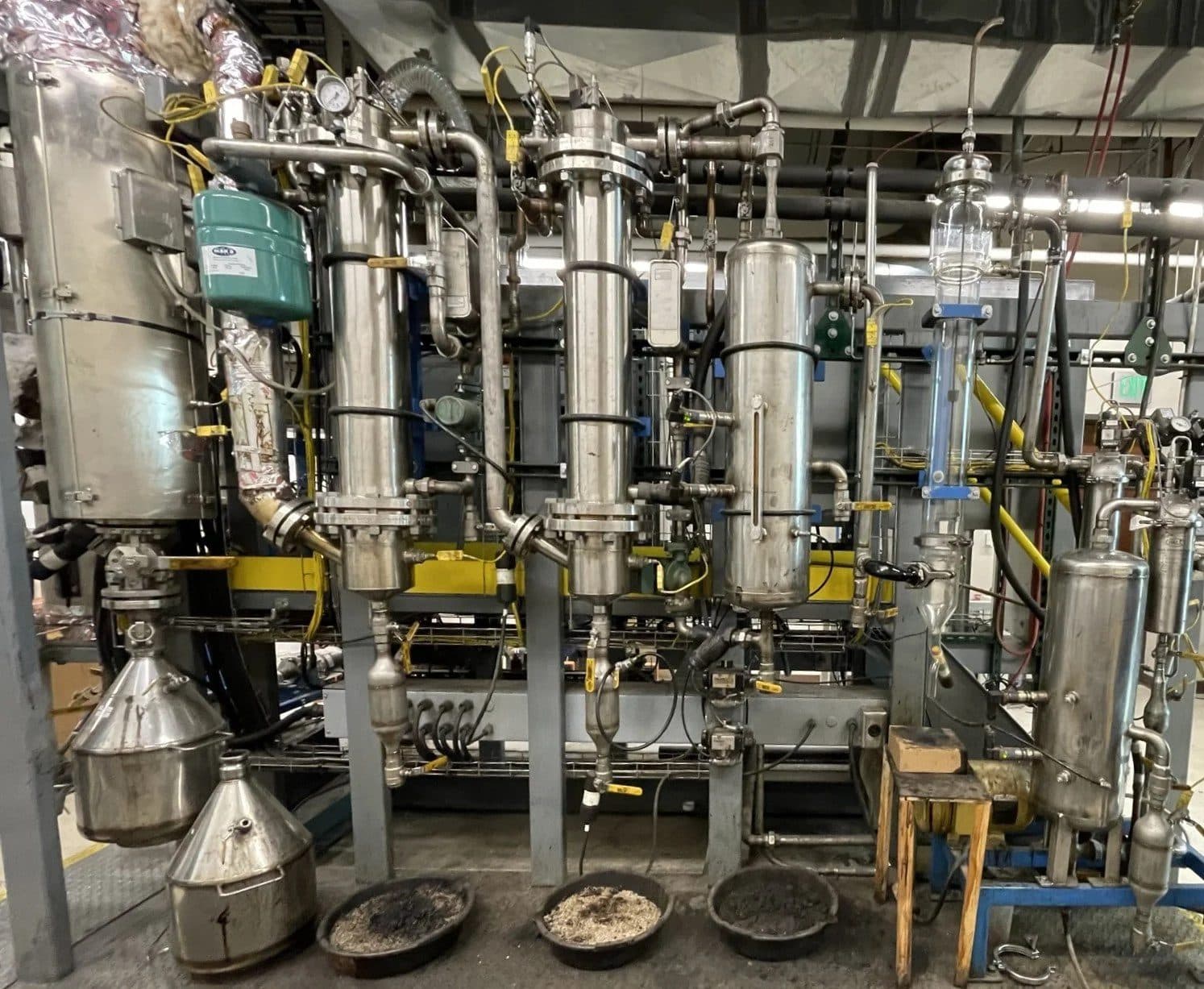
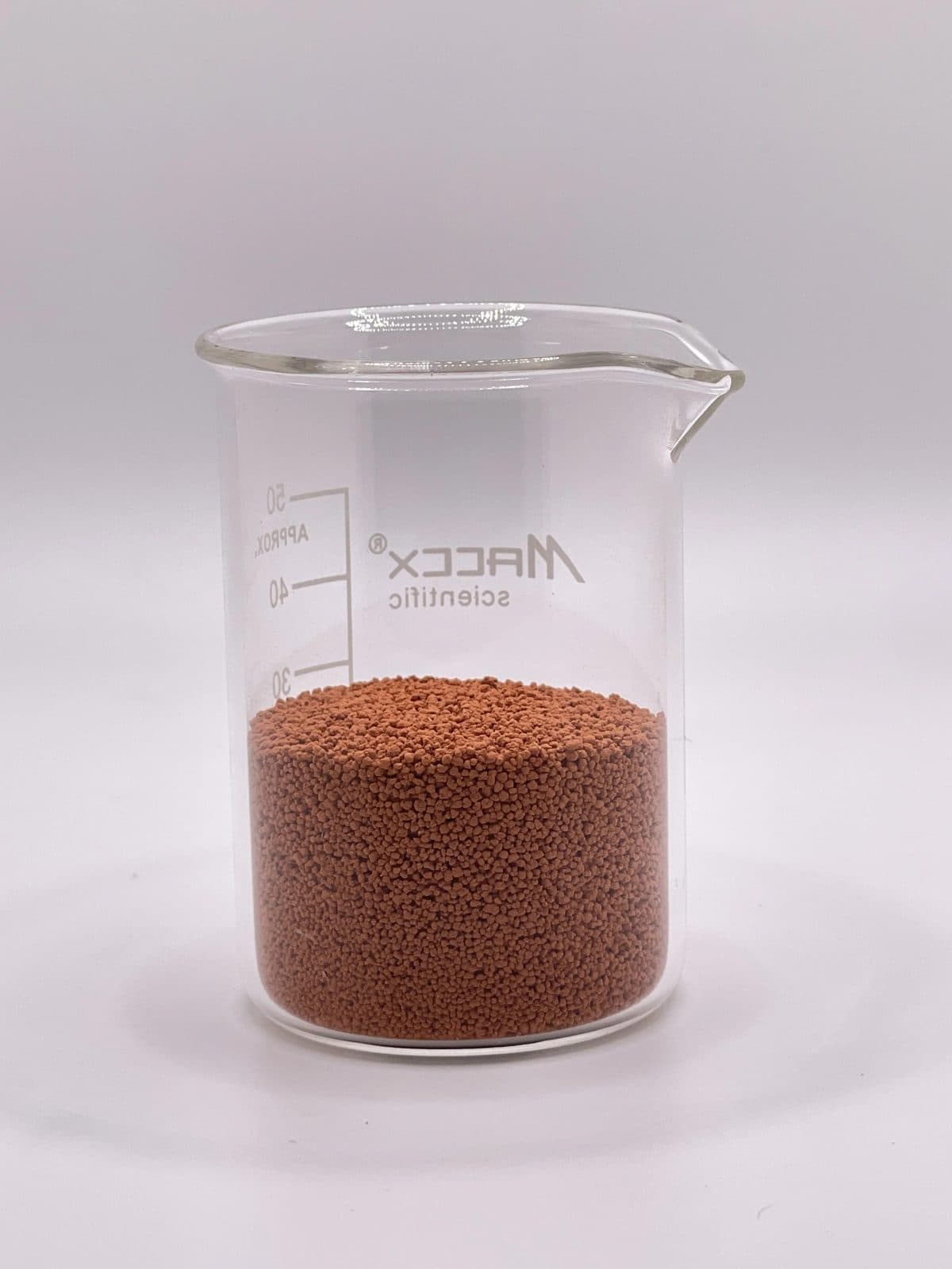
Among the primary thermochemical conversion routes (i.e., gasification, and fast pyrolysis), fast pyrolysis is the most economically feasible way to convert biomass into liquid fuels, and therefore has attracted a great deal of research over the past two decades.
The liquid product
Fast pyrolysis shows the highest yield to liquid fuel products and retains most of the energy from feedstocks in the liquid products. The primary liquid product of fast pyrolysis of biomass is generally called bio-oil, which is obtained by immediately quenching the pyrolysis vapors. Bio-oils are composed of a large variety of condensable chemicals derived from many simultaneous and sequential reactions during the pyrolysis of lignocellulosic biomass.
Upgrading the bio-oil
It is desirable and necessary to improve the quality of bio-oil toward properties similar to those of hydrocarbon fuel by certain upgrading techniques. Oxygen must be removed before the bio-oil can be used as a replacement for diesel and gasoline. Bio-oil can be upgraded either off-line or during the fast pyrolysis assisted with a catalyst, the so-called catalytic fast pyrolysis (CFP).
Our process
The pyrolysis technology is already widely used industrially in recycling and energy production. Using extreme heats, the energy of feedstocks can be concentrated into usable bio-crude oils. Our patented process increases efficiency of pyrolysis by using an innovative bauxite residue catalyst. No byproduct is wasted as the gases are reused for heating the reactor and useful solids like biochar are captured for use in other industries.
Our development work centers on modularity, feedstock flexibility, efficient resource recovery, and commercial scalability.
The objective is not simply to heat a material or separate a single component. It is to integrate feed preparation, conversion, cleanup, recovery, quality control, and safe operation into a complete process platform.
Controlled thermal conversion
Selected feedstocks are processed in an oxygen-free thermal environment. Heat breaks larger molecules into smaller hydrocarbon molecules that can be recovered as liquids and gases. Operating conditions are managed to favor useful liquid production while limiting uncontrolled cracking and excessive formation of non-condensable gases.
Catalytic upgrading
A formulated mineral-based catalyst supports cracking, contaminant management, and product stabilization. The catalyst is designed for repeated operating and regeneration cycles; during regeneration, accumulated carbon is removed under controlled conditions so that catalyst activity can be restored. The catalyst formulation, preparation method, reactor configuration, operating windows, and regeneration sequence are proprietary.
Product recovery and quality control
Converted vapors pass through a staged recovery system that condenses the desired liquid and separates non-condensable gases. Recovered liquids are filtered, collected, sampled, and evaluated before release. Material that does not meet the selected product criteria can be recirculated for additional processing rather than automatically becoming waste.
Feed preparation and metering
The incoming material is pre-treated as needed and delivered to the reactors at a controlled rate.
Thermal and catalytic conversion
The feed breaks down at high operating temperature, and the resulting vapors contact a heated catalytic environment under controlled, oxygen-free conditions. This is known as catalytic pyrolysis.
Vapor recovery
Pyrolysis vapors are cooled and condensed. Non-condensable gases are collected and managed safely, and may provide recoverable process energy in a commercial configuration.
Liquid finishing
Recovered liquid is separated from entrained solids, filtered, sampled, and directed either to an approved product tank or back for additional processing.
Catalyst regeneration
When operating data indicate increasing resistance or declining performance, the affected reactor is isolated and the catalyst is regenerated under carefully controlled gas composition and temperature.
Monitoring and safeguards
Temperature, pressure, differential pressure, feedstock flow, air flow, and product-quality measurements are used to keep the process within its approved operating envelope.
Used motor oil
Recovery and upgrading of hydrocarbon value from a variable, contaminant-bearing waste oil stream.
Waxy and difficult crude oils
Conversion of high-wax material into hydrocarbons with improved handling and stability at ambient conditions.
Carbon-rich solid wastes
Conversion of waste tires, woody biomass, and other carbonaceous materials for liquid recovery and useful carbon products.
Industrial water
Treatment systems designed to oxidize difficult organic contaminants and support water reuse where the water chemistry is suitable.
Bioenergy Fuels is also developing a treatment platform for industrial and produced water. The process combines physical separation with an advanced oxidation step that is further improved by our catalyst. Downstream quenching, filtration, and pH adjustment are used to prepare treated water for its intended reuse or subsequent polishing. Final treatment requirements depend on the treated-water analysis and the customer’s discharge or reuse standard.
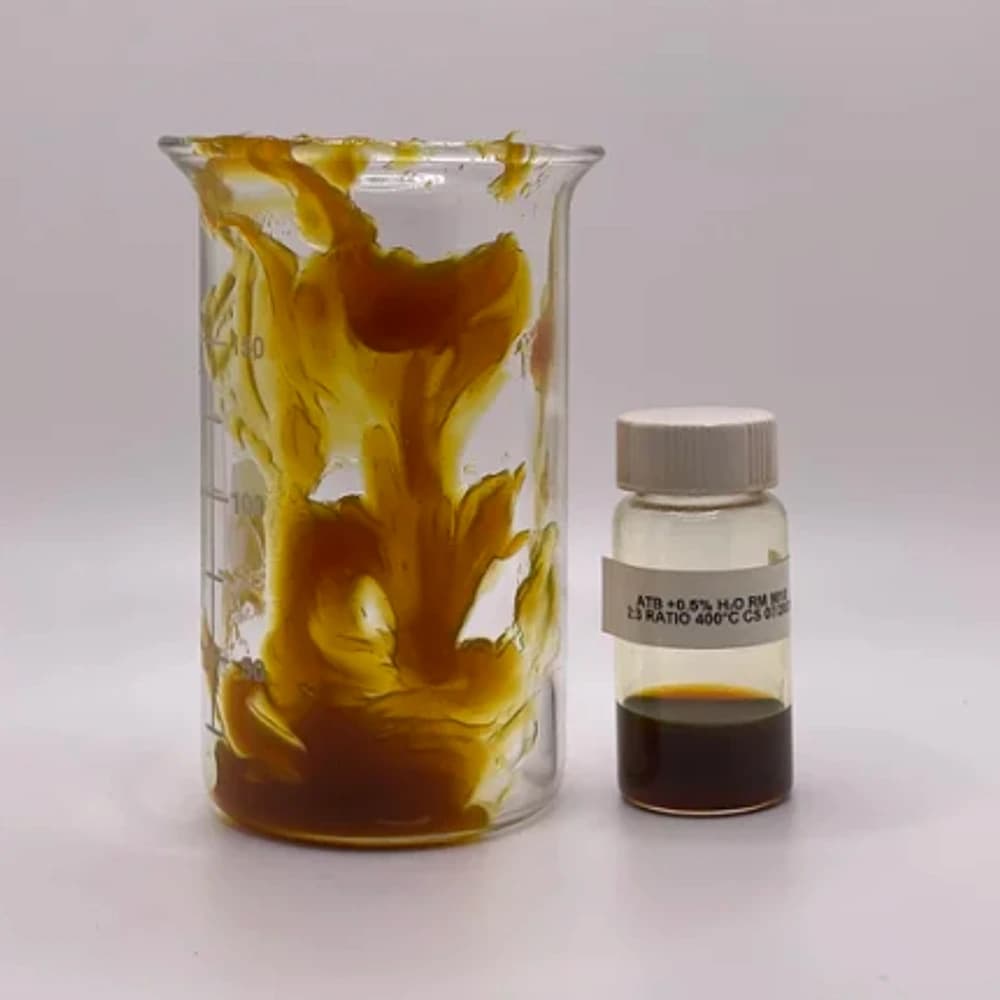
Waxy crude converted into pipeline grade crude.
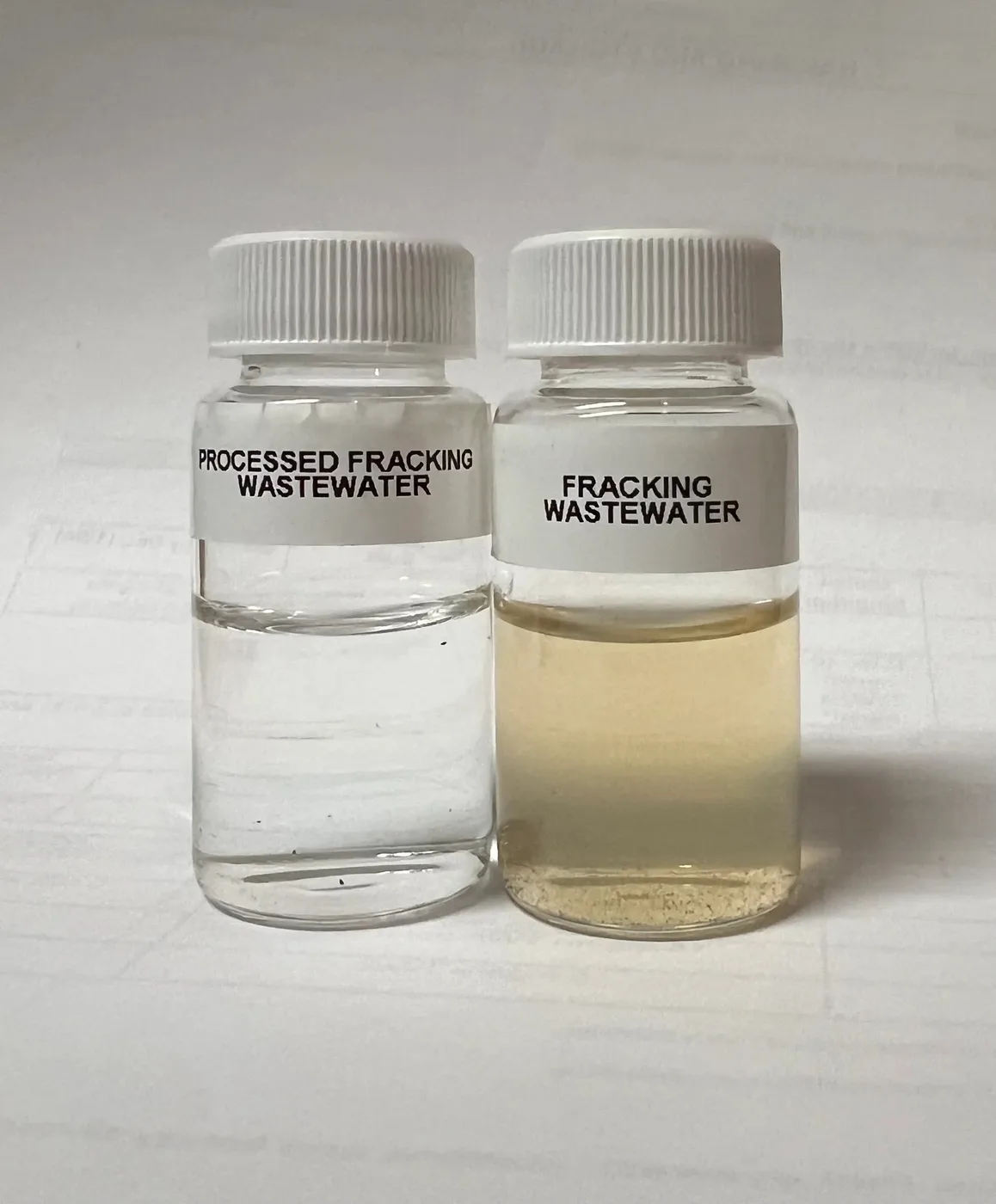
Contaminants and heavy metals stripped to near-clear water.
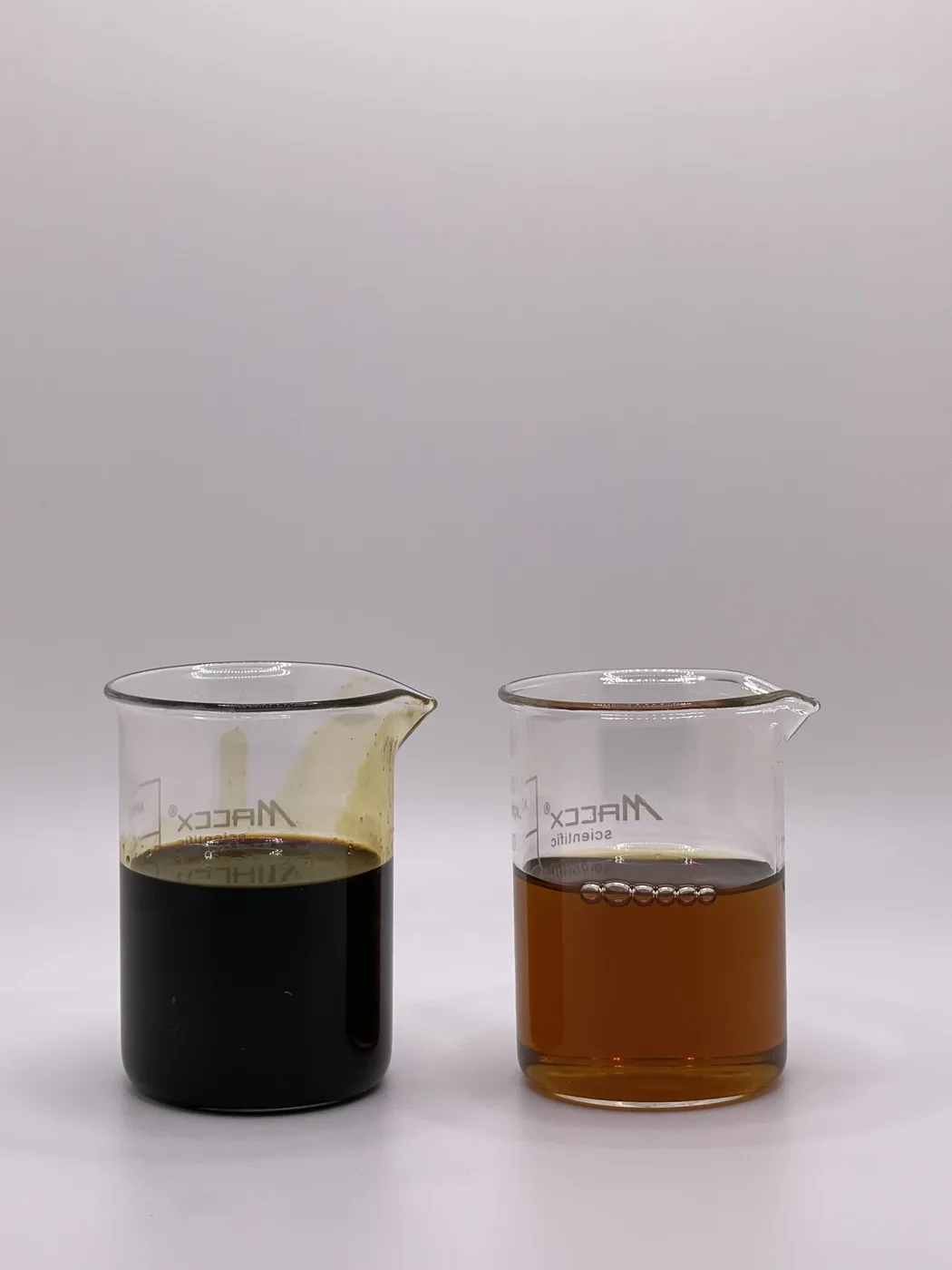
Used motor oil in, low sulfur fuel out. One catalytic pass.